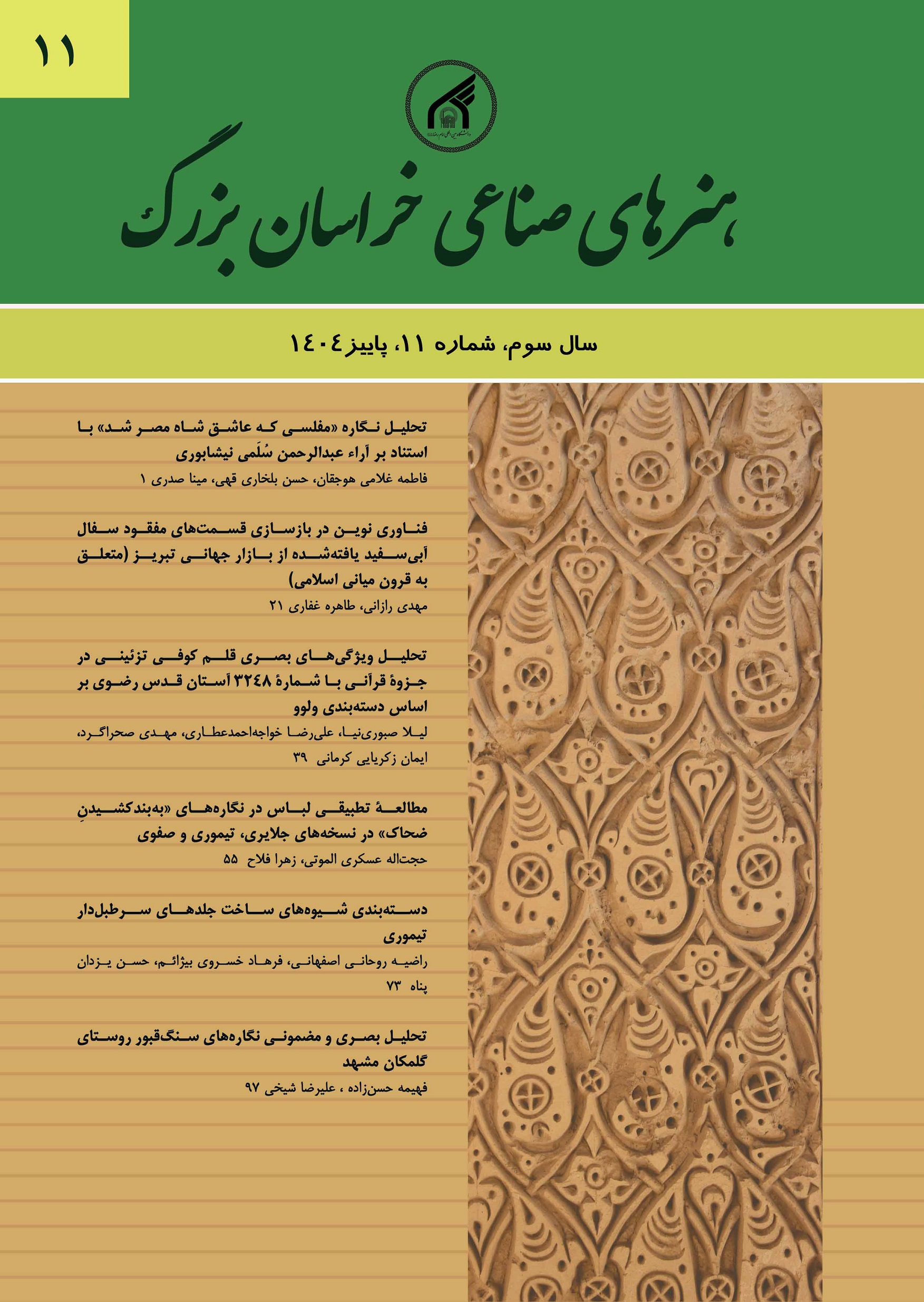
نشریه علمی هنرهای صناعی خراسان بزرگ

نشریه علمی هنرهای صناعی خراسان بزرگ

تحلیل نگاره "مفلسی که عاشق شاه مصر شد" با استناد به آراء عبدالرحمن سُلَمی

نوع مقاله : مقاله پژوهشی

نویسندگان
1 دانش‌آموخته دکتری تخصصی تاریخ تطبیقی و تحلیلی هنر اسلامی، گروه مطالعات عالی هنر، دانشکده هنرهای تجسمی، دانشکدگان هنرهای زیبا،
2 استاد تمام گروه مطالعات عالی هنر، دانشکده هنرهای تجسمی، دانشکدگان هنرهای زیبا، دانشگاه تهران، ایران
3 دانشیار گروه نقاشی و مجسمه سازی، دانشکده هنرهای تجسمی، دانشکدگان هنرهای زیبا، دانشگاه تهران، ایران
10.22034/hgj.2026.575957.1060
چکیده
نگاره‌های عرفانی مکتب هرات ملهم از منطق‌الطیر عطار نیشابوری که در دوره تیموری مصور شده‌اند حاوی نکات نغز عرفانی فراوانی هستند. از طرفی برخی عرفای مکتب عرفانی خراسان بزرگ مانند عبدالرحمن سُلمی نیشابوری آموزه‌های مفیدی در حوزه عرفان عملی و طی کردن مراحل سلوک از خود به یادگار گذاشته‌اند که رساله مهجور وی «جوامع آداب الصوفیه» از آن جمله است که در پژوهش حاضر مورد بررسی قرار گرفته و انطباق میان برخی آموزه‌های آن با نگاره «مفلسی که عاشق شاه مصر شد» از منطق‌الطیر محفوظ در موزه متروپولیتن مورد توجه بوده‌است. لذا هدف این پژوهش را می‌توان شناسایی ارتباط میان آموزه‌های سلمی با نحوه عملکرد شخصیت‌ها و کلیّت داستان نگاره دانست. در این راستا سعی شده به سوال زیر پاسخ داده‌شود: آموزه‌های سلمی نیشابوری در باب عرفان عملی در نگاره چگونه بروز داشته‌است؟ در مجموع مشخص شد که شخصیت‌های با رفتار و کردار و گفتار مثبت تطبیق پذیری بسیار بالایی با آداب مطروحه از منظر سلمی داشته و حرکات و سکنات تنها شخصیت منفی داستان (مفلس) در تقابل کامل با آموزه‌های سلمی و حاکی از آن است که سلمی و عطار به عنوان تربیت‌یافتگان مکتب عرفانی خراسان بزرگ، علی‌رغم فاصله 200ساله به نکات واحدی اشاره‌کرده‌اند که با گذر زمان تغییرات چندانی به خود ندیده چراکه منابع معرفتی آنان نظیر قرآن کریم و سنت پیامبر اکرم ﴿ﷺ﴾ یکسان بوده‌است. پژوهش حاضر به صورت کیفی و با رویکرد توصیفی- تحلیلی و با استفاده از منابع کتابخانه‌ای (واقعی: کتب و مقالات و مجازی: تارنماهای مرتبط) نگاره مورد نظر را مورد واکاوی قرار داده‌است.
کلیدواژه‌ها
موضوعات

عنوان مقاله English

Analyzing the “Bankrupt who fell in love with the king of Egypt” painting, based on Abd al-Rahman Sulami Neyhaburi's point of view

نویسندگان English

Fatemeh Gholami Houjeghan 1
Hassan Bolkhari Ghehi 2
Mina Sadri 3
1 Ph.D. in Comparative and Analytical History of Islamic Art, Department of Advance Art Studies, Faculty of Visual Art, Faculties of Fine Arts, Tehran University, Tehran Iran,
2 Full Professor, Faculty of Visual Art, Department of Advance Art Studies, Tehran University, Tehran Iran
3 Associate Professor, Department of Painting and Sculpture, Faculty of Visual Art, Tehran University, Tehran Iran
چکیده English

The mystical paintings of the Herat school, inspired by Attar Nishaburi's Conference of the Birds, created during the Timurid period, contain a wealth of profound spiritual insights. On the other hand, certain mystics of the greater Khorasan mystical tradition, such as Abd al-Rahman Sulami Nishaburi, have left invaluable teachings on practical mysticism and the stages of spiritual journey. One notable example is Sulami’s neglected treatise, “Jawame' Adab al-Sufiya”, which has been analyzed in this study in connection with the painting “Bankrupt who fell in love with the king of Egypt” from “Conference of the Birds”, housed at the Metropolitan Museum. This research aims to identify correlations between Sulami’s teachings and the behaviors, actions, and overarching narrative of the painting’s characters. Specifically, it seeks to answer the question: How are Sulami’s practical mystical teachings reflected in the painting? The findings suggest a notable alignment between Sulami’s proposed ethical standards and the conduct, speech, and overall virtuous actions of the positive characters within the narrative. Contrarily, the movements and demeanor of Bankrupt stand in stark opposition to Sulami’s principles. This contrast highlights that both Sulami and Attar, shaped by the mystical tradition of greater Khorasan, despite being separated by several centuries, address common themes that have remained largely unchanged over time. This consistency stems from their reliance on shared foundational sources such as the Quran and the teachings of Prophet Muhammad ﴿ﷺ﴾. This qualitative study adopts a descriptive-analytical approach, supported by library references (physical /digital), to thoroughly examine and interpret the painting.

کلیدواژه‌ها English

The Conference of the Birds
Persian painting
practical mysticism
Abd al-Rahman Sulami Neyshaburi

  • تاریخ دریافت 26 شهریور 1404
  • تاریخ بازنگری 20 مهر 1404
  • تاریخ پذیرش 19 آبان 1404